
Communities and Volunteering: The Power of a Trusted Adult
9 October 2026
It’s Tackling Child Poverty Week. Today’s theme is a chance to recognise the strength of Scotland’s communities, the contribution of volunteers, and the difference that community-led action can make. Across Scotland, people dedicate their free time every day to support others and strengthen the places they call home.
Volunteering can take many forms. It can mean supporting a local club, helping a community organisation, fundraising for a cause, or simply giving your time to someone who needs it. Sometimes, it means becoming a trusted adult in a young person’s life.
The Policy Context: Child Poverty as Scotland’s Top Priority
Tackling child poverty is not just one of many Scottish Government policy interests—it is explicitly identified in the Scottish Government’s 2026–27 Budget as its single top central priority, alongside economic growth, tackling the climate emergency, and improving public services.
This priority is anchored across three critical dimensions:
- A Legal Commitment: The Child Poverty (Scotland) Act 2017 sets statutory targets for 2030–31, including reducing relative child poverty to below 10%.
- A Dedicated Delivery Plan: Bringing Hope, Building Futures sets out the Scottish Government’s approach for 2026–2031.
- Targeted Investment & Interventions: Direct structural and income-based measures including the Scottish Child Payment, employment support for parents, expanded childcare, housing, transport, and wider family support.
Priority vs. Progress: Why Mentoring is Essential
Crucially, there is a distinct difference between making child poverty a government priority and achieving statutory targets. In its scrutiny of the legislation, the Scottish Parliament’s Social Justice and Social Security Committee concluded that measures taken had not generated sufficient action to meet targets. The Scottish Government itself acknowledged that Scotland was not on track to meet all four 2030 statutory targets.
While MCR Pathways does not position mentoring as a direct financial solution to poverty, trusted adult relationships play an essential role in complementing cash transfers and income-based interventions. Mentoring addresses non-financial, relational, and emotional barriers, enabling young people to build confidence, realise their talents, and convert opportunities into long-term success.
One Relationship Can Make a Difference
Every young person deserves the opportunity to recognise their strengths, develop their confidence, and realise their potential. But not every young person has the same access to the trusted adult relationships, experiences, and encouragement that can help them get there. That is where volunteer mentoring makes such a difference.
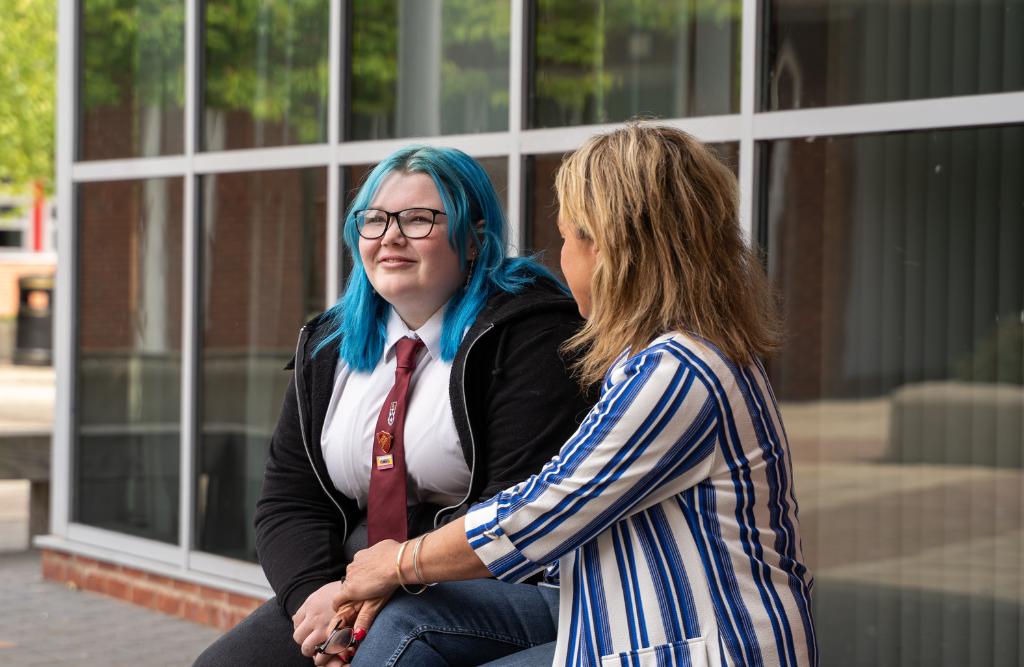
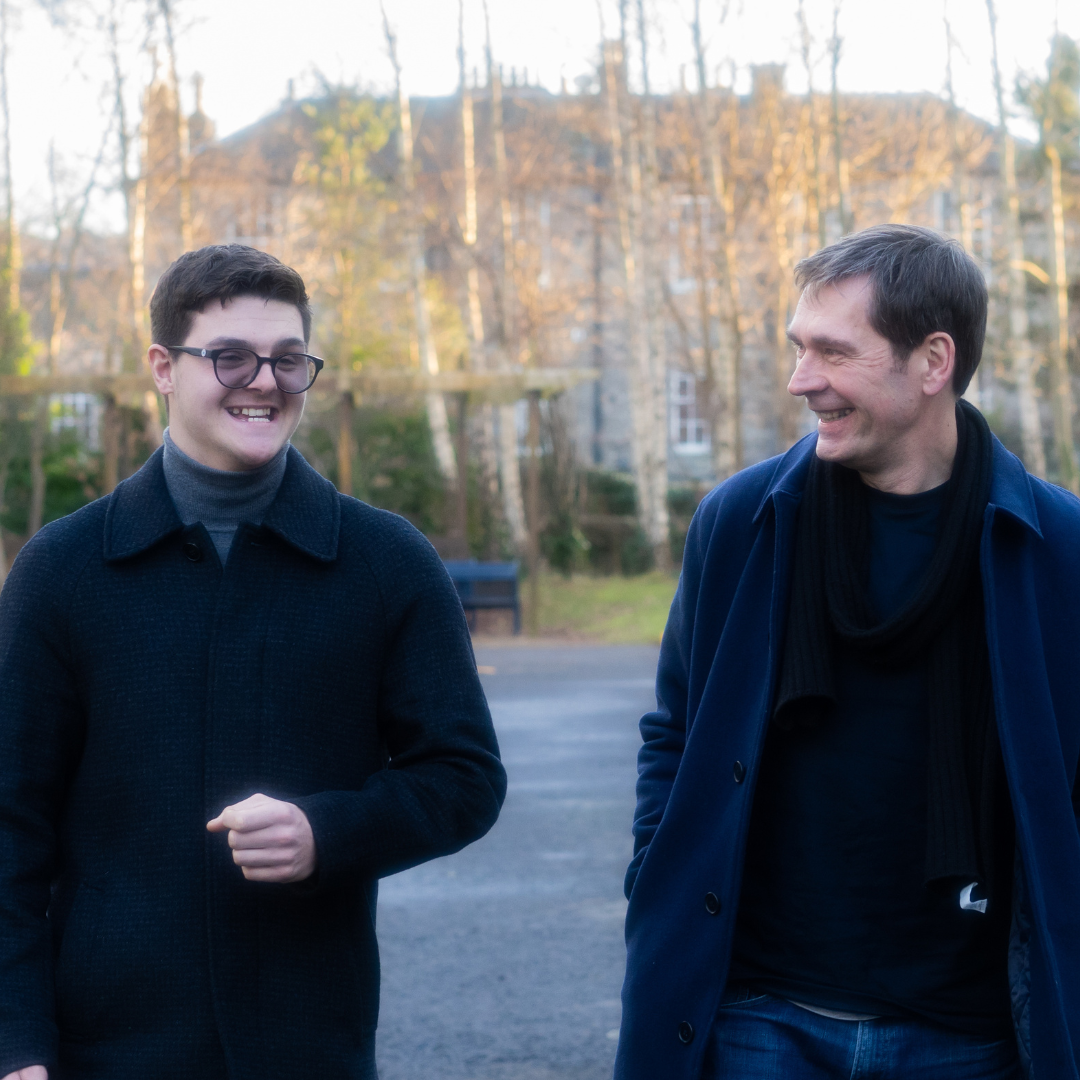
Through MCR Pathways, volunteer mentors build a consistent, supportive relationship with a young person. They listen, encourage, and support them to see their potential and possibilities for their future.
They do not need to have all the answers. Often, the most important thing they can offer is their time, their attention, and the knowledge that someone believes in them. One hour a week can become one of the most important hours in a young person’s week.
Strong Communities Support Young People to Thrive
The strength of our communities is reflected in how we support one another. For young people navigating additional barriers or disadvantages, having access to a trusted adult can help them navigate unique challenges, build confidence, and make informed choices about their future.
That support can be particularly important at times of transition—whether moving through school, into further education, training, employment, or other positive destinations.
That is why MCR Pathways is continuing to expand beyond its traditional school-based model, including into Further Education and community spaces. The aim is to reach more young people, support wider transitions, and ensure that more young people can benefit from a trusted adult relationship when they need it.
The Role of Mentoring in Helping Break Cycles of Poverty
Trusted adult volunteer mentors serve as a vital, system-wide mechanism for the Scottish Government, local and combined authorities, schools, and community services supporting young people.
Establishing a trusted adult guarantee offers public services and partners a proven delivery mechanism to help achieve existing government ambitions without requiring entirely new services or competing policy priorities.
Volunteer mentors support young people across key strategic pillars:
- Prevention: Building confidence, resilience, and high aspirations early on helps young people navigate personal and structural barriers associated with poverty.
- Education & Opportunity: Mentors help bridge gaps in opportunity, supporting educational achievement and ensuring personal circumstances are never a barrier to success.
- Transitions & Long-Term Earning Potential: MCR Pathways’ expansion into further education and community settings creates vital continuity of support as young people move towards employment, training, and higher-earning positive destinations.
Many mentors bring a wealth of experience from their own careers. By sharing their journeys, challenges, and achievements, they spark academic and career aspirations—demonstrating boldly what is possible when you believe in yourself and can see an exciting path ahead.
Volunteering as Part of the Solution
Scotland faces significant challenges in tackling poverty and inequality. There are no simple solutions, and no single organisation can address them alone. But communities have an important role to play.
When public services, charities, schools, colleges, businesses, community organisations, and volunteers work together, we can create stronger networks of support around young people. That is why we believe mentoring should be seen not simply as a service, but as part of a wider approach to building opportunity and tackling inequality.
A volunteer mentor might only spend an hour a week with a young person. But collectively, thousands of those trusted adult relationships can help create a culture where every young person knows there is someone in their corner.
Impact & Social Value
Our impact evidence demonstrates clear social value: mentored young people achieve higher educational outcomes, progress to positive post-school destinations at significantly higher rates, and build stronger long-term earning potential. Recent findings from an Ipsos report underline these benefits for young people:
-
School Attendance: MCR Pathways shows a statistically significant positive effect on S5 school attendance, with Care Experienced pupils attending school an estimated 28,850 additional days in S5 between 2014/15 and 2021/22.
-
School Exclusions: MCR Pathways led to a 7 to 9 percentage point reduction in care-experienced pupils ever being excluded from school, equating to around one-third of the total gap between care-experienced and non-care-experienced pupils.
-
Post-School Destinations: At 9 months post-school, there was a 5 to 7 percentage point increase in all positive destinations.
The £1 million further investment from the Scottish Government reflects clear belief and commitment in mentoring as a key mechanism to help eradicate child poverty.
Towards a Trusted Adult for Every Young Person
At MCR Pathways, we want to see a future where every young person, regardless of their circumstances, can realise their talent through the power of mentoring. That ambition is at the heart of our work and our commitment to developing the case for a Trusted Adult Guarantee in Scotland.
The idea is simple: young people should be able to access a trusted adult relationship when they could benefit from one.
It does not need to mean creating a new service or another layer of bureaucracy. Instead, it provides a mechanism for connecting and strengthening the support already available through Scotland’s schools, colleges, communities, voluntary organisations, and public services.
Because strong communities are not simply about the places we live. They are about the relationships we build within them. And sometimes, the most powerful contribution someone can make is simply to show up, listen, and be there.
One volunteer trusted adult mentor. One young person. One trusted relationship. It can make all the difference.
Take Action: Help Ensure Everyone Has Someone
Become a Volunteer Mentor
Addressing structural inequality cannot be achieved by government policy alone; it requires a collective, community-wide effort. By giving just one hour a week, you can become a trusted adult volunteer mentor who helps a young person navigate challenges, unlock potential, and discover a brighter future.
Become a Partner
Work with us to make a lasting difference for young people in your local community. Whether by giving your workforce the flexibility to become volunteer mentors or by creating and delivering aspirational opportunities, your organisation can help open doors, broaden horizons, and support young people to see what’s possible for their future.
Support Our Policy Work
MSPs, MPs, local councils, and combined authorities have a vital role to play in creating the conditions where every young person can thrive. Work with us to ensure young people’s voices and lived experiences are heard in decision-making, strengthen community support, and help embed a trusted adult guarantee across Scotland.