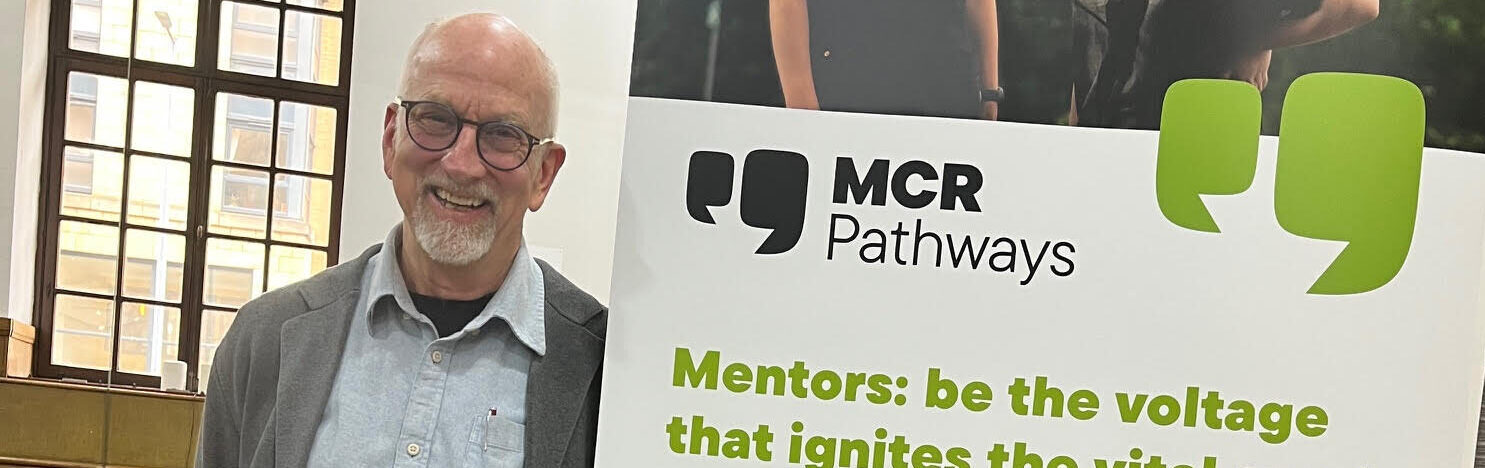
Seven Years of Mentoring and a Lasting Legacy
9 April 2026
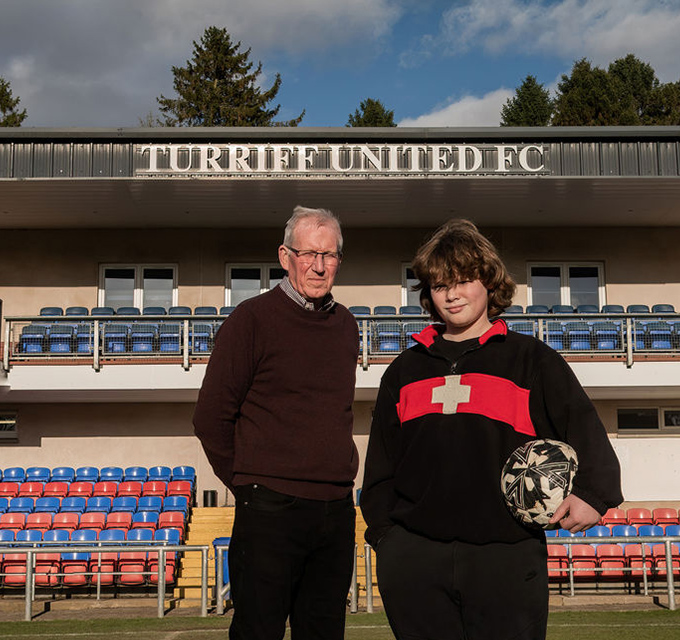
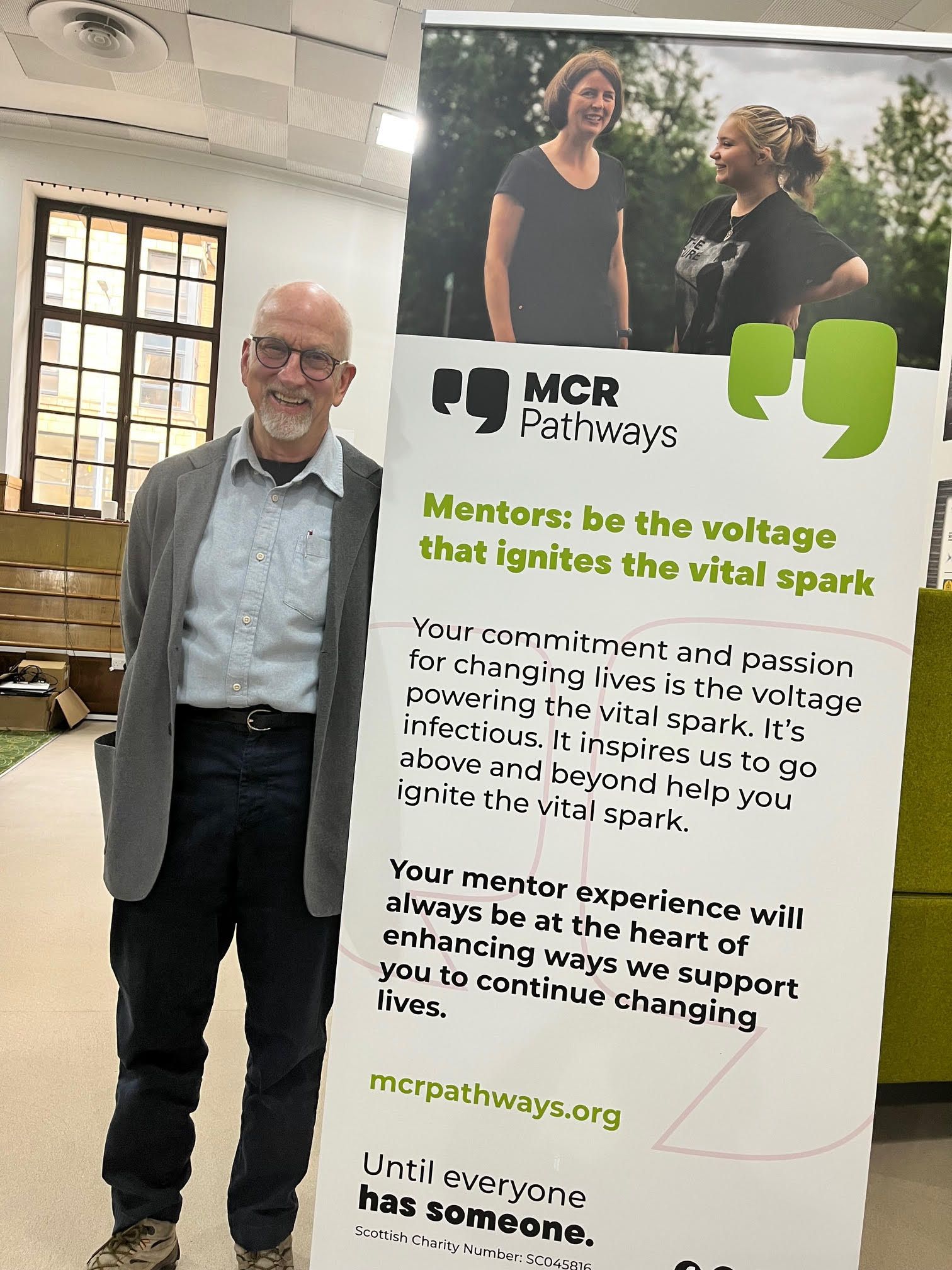
On what proved a poignant day for all at MCR Pathways, one of our longest-serving mentors, Bill Armstrong, visited our Mitchell Library offices to say goodbye and to reflect on a mentoring journey that has made a lasting difference to young people across the City of Glasgow.
Having dedicated 7 years to supporting and inspiring his mentees, Bill has been a constant source of encouragement, guidance and belief. As he now prepares to begin an exciting new chapter in France, he leaves behind a powerful legacy within the MCR Pathways community.
We caught up with Bill to look back on his experience, the relationships he’s built, and what mentoring has meant to him over the years.
Q: So what or who inspired you to become a mentor?
A: I started out as a writer in London. Over time, I became very aware of how difficult it is for young people, especially women, ethnic minorities, and those from working-class backgrounds, to break into my industry. I first got involved in mentoring through a running buddy who worked for a mentoring organisation in London. We’d run and talk, and that’s how I got my first taste of mentoring.
Back then, it was about going into schools, talking to large groups of kids, and telling them “anything is possible.” In my experience, that’s a bit of an overstatement; there was a noticeable lack of diversity when it came to writing in the UK.
So I found that approach to be a little dishonest. When I moved to Glasgow, I joined MCR Pathways, which was very different. My first mentee wanted to be a writer. They ended up pursuing music instead, and while they didn’t continue writing, the work we did together had a huge impact. Mentoring has turned out to be far more rewarding than I could have imagined.
Q: How have you fitted mentoring into your career?
A: Luckily, being a TV writer is flexible, I mostly work from home. I could fit mentoring around my work schedule. For example, Hillhead is just a 20-minute walk from where I live, so it was easy to organise my time around mentoring sessions.
Q: What qualities do you believe are essential for a mentor?
A: The two most important qualities are patience and consistency.
Patience is key because mentees often take a long time to trust you. For example, my current mentee is dyslexic and autistic. It took over three years of weekly sessions, mostly playing chess, before he opened up about the challenges in his life. Consistency, showing up week after week, builds trust. That reliability is what makes the difference.
Q: What does “connection” mean for you in mentoring?
A: Connection is when your mentee trusts you. My mentees are very different from me in age, background, and interests. Yet, over time, we’ve built a strong bond. Being the one reliable adult who listens without judgment creates that connection, no matter how different your lives are.
Q: What impact has mentoring had on you personally?
A: It’s been transformative. Watching mentees grow and overcome challenges has enriched my life immensely. One of my first mentees faced severe personal struggles but eventually got into university. Moments like that, the sense of shared achievement, are profoundly rewarding. Mentoring has been a massive boost to my happiness and mental well-being.
Q: What do you hope mentees get out of mentoring?
A: I hope they realise their own resilience. Often, young people have very few adults in their lives who offer guidance without judgment. Mentoring shows them that someone believes in them, listens to them, and will simply be there. Sometimes, that’s the most impactful lesson they can get.
Q: Why should others volunteer to become mentors?
A: Mentoring has been the most constructive thing I’ve ever done for my mental health. Many mentors feel they get far more out of it than the mentees do. It’s a deeply rewarding experience that enriches your life while giving someone else the support they need.
Q: Do you have any advice for new mentors?
A: Be patient, consistent, and creative. Games are a great way to engage mentees and break down barriers. Encouraging journaling or writing, even if just a few lines a day, helps young people process their thoughts. Ultimately, it’s not about what you do; it’s about being present and showing that you care.
We wish Bill on starting the next chapter of his life in France, and offer our sincere thanks for his dedication, commitment and passion to supporting young people to realise their potential and much more through the power of mentoring.
Right now, there are many young people across the city of Glasgow who need someone, like Bill, in their corner.
By becoming a volunteer mentor with MCR Pathways, you can help a young person realise their potential and find a path to a brighter future.
Find out more: https://mcrpathways.org/become-a-mentor/